Audio Description as a Tourism Proposal
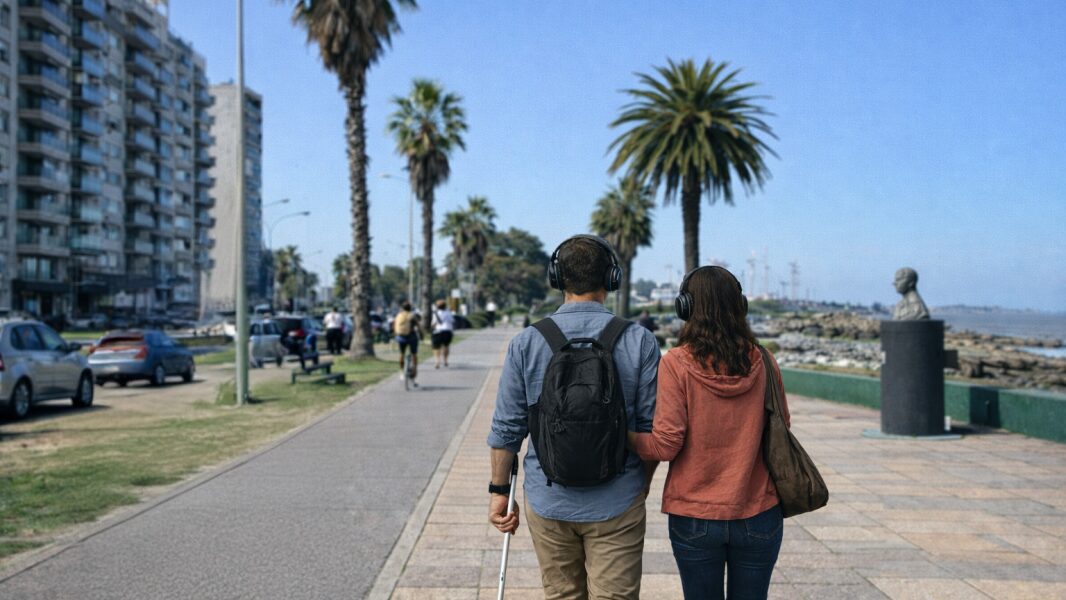
Our country is rich in tourism potential, opening the door to all kinds of experiences to explore. In recent times, creative and disruptive proposals have emerged that draw both foreign visitors and local audiences who don't always find offerings where they can feel fully satisfied.
Companies like Domo Silent, with the collaboration of artists such as Guillermo Lockhart and his Silent Horror Tour project, and Carlos Dopico with Montevideo sonoro, offer innovative sound tours through different spaces, accompanied by stories and music that build an immersive experience.
Guillermo Lockhart proposes nighttime tours through different points of the capital, using terror and the mystery surrounding paranormal stories and testimonies as the connecting thread. Spaces that are ordinary urban settings by daylight become mythologized and amplified through Guillermo's storytelling, building a uniquely sensory experience through his narration. As a daytime counterpoint, Dopico offers a historical, cultural tour packed with musical information, enriching Montevideo's classic landmarks through the fusion of tourism and Uruguayan music.
What both proposals have in common is that they run on Domo's wireless devices, which let visitors move freely through the space while following a narration that enriches the experience. But what if these narrations also included descriptive, physical, and spatial information about the places being toured?
Audio description is an accessibility tool that translates images into words. It's a narration originally intended to let people with visual disabilities access visual information. These proposals show us that, logistically, it's entirely possible to offer a tour with sound accompaniment in a way that's creative and enjoyable for the audience.
That leads us to wonder about other tourism alternatives that could explore accessibility as a way to enhance the experience — from tours along Montevideo's rambla exploring our city's architecture, to the poetic potential of describing the sensations and feelings stirred up by a sunset on our coast. This kind of proposal opens the door to exploring the tool from a comprehensive angle, inviting other artists to help build accessibility together, and encouraging public and private organizations to champion accessible tourism for everyone.