When Culture, Communication, and Technology Meet: New Perspectives on Accessibility
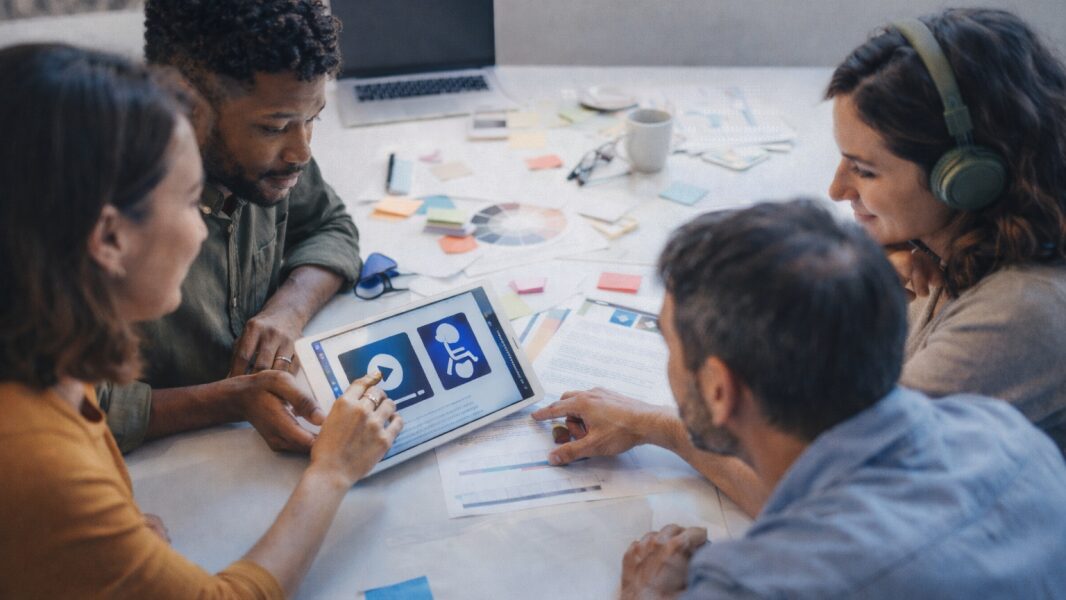
In recent years, accessibility has become a dynamic space where cultural, communicational, and technological practices converge. Different experiences show that the most solid progress happens when these three practices talk to each other and feed off one another, producing solutions that account for different ways of perceiving, understanding, and participating. Museums working with community groups to build audio-described tours, digital platforms adding features designed for different modes of navigation, or shows that weave accessible tools into their own artistic language. In every one of these cases, accessibility doesn't show up as an added layer — it works as a form of design that connects disciplines and broadens the cultural and digital experience.
This approach relies on increasingly interdisciplinary ways of working, bringing together designers, developers, artistic teams, accessibility specialists, and users. Combining this range of knowledge makes it possible to understand challenges from multiple angles and anticipate barriers that aren't visible from any single field.
At the same time, the most innovative initiatives draw on knowledge from other spaces — lived experience, community context, or artistic practice. In cultural projects, these moments of co-creation transform the relationship between teams and audiences, letting accessibility enhance the experience rather than simply accompany it. In technology, culture, and communication, this shows up as participatory methodologies that bring users' voices in from the earliest stages of development and design.
Intersectionality is also key to understanding how different realities intertwine when it comes to accessing cultural or digital content. No one experiences a work, a website, or an app from a single dimension. Age, social context, sensory abilities, available devices, digital habits, and cultural references all shape every interaction. Designing for accessibility means recognizing this diversity and working with it, not against it.
In Uruguay, experiences that move in this direction are starting to take shape: performances with live audio description, festivals that build in accessible tools, adapted audiovisual content, and digital projects that bring accessibility criteria into the design process from the start. These cases show there's fertile ground for strengthening the connection between culture and technology.
The challenge now is to deepen these models by building teams capable of bringing together different methodologies, sensibilities, and languages. Accessibility isn't just a technical requirement or an isolated responsibility — it's a way of working that creates clearer, more enjoyable experiences, better suited to the real diversity of people.
Watching what's happening internationally opens up an opportunity for Uruguay, making it possible to build an ecosystem where culture, communication, and technology collaborate naturally, elevating the quality of cultural and digital experiences.
When these fields meet, accessibility becomes an engine of innovation — and, above all, a tool that improves the experience for everyone.