What Can International Experience Teach Us About Accessibility in Sports?
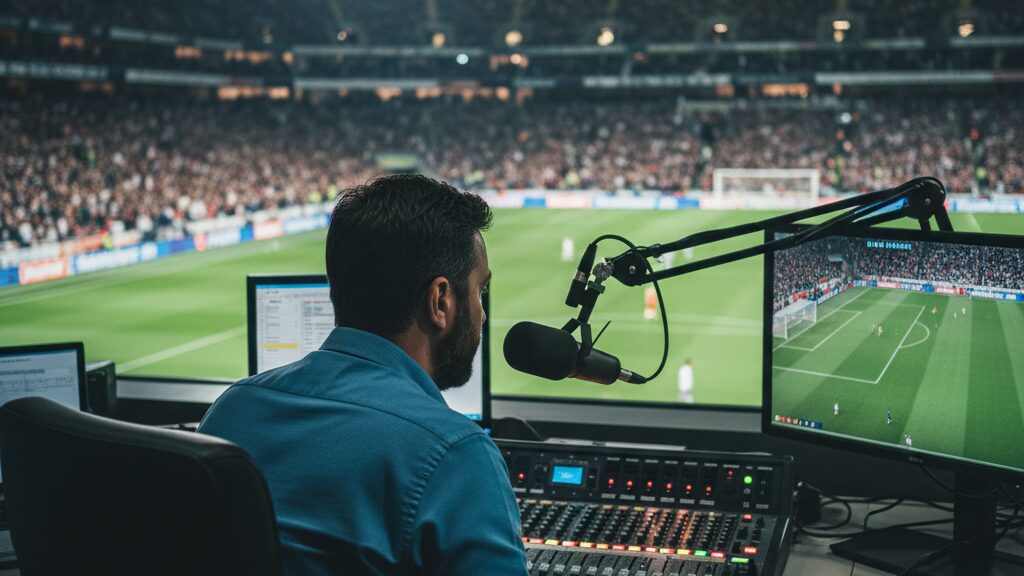
Accessibility in live sports broadcasts has been gaining ground internationally in recent years. FIFA has been one of the organizations driving this shift the most: its audio descriptive commentary (ADC) program launched at the 2014 Brazil World Cup and has since been successfully implemented at recent competitions like Qatar 2022 and the 2023 Women's World Cup. In 2025, the Club World Cup also offered the service in English and Spanish, cementing an accessibility model that's now part of the official structure of its events.
Along the same lines, British broadcaster ITV added descriptive commentary this year to matches in the Guinness Six Nations rugby tournament, reinforcing a global trend toward more inclusive broadcasts. In that same vein, ESPN and Disney+'s coverage of the 2024/2025 UEFA Champions League final between Paris Saint-Germain and Inter Milan marked another meaningful step, especially in the Latin American context, where offerings like this are still few and far between for viewers.
On May 31, during the UEFA Champions League final between Paris Saint-Germain and Inter Milan, ESPN and Disney+ offered an alternate audio channel to watch the match with what they called "audio-descriptive narration." Journalist Germán Sosa handled the commentary on this parallel channel, designed to translate what's on screen rather than simply accompany it. Spoken descriptions were added covering player positioning on the field, coaches' reactions, or the way a player wipes their face or walks off frustrated after missing a chance — visual details that add context to the on-field action.
This format, which ESPN calls "audio-descriptive commentary," is close to what we in the accessibility field know as audio description: a tool that translates the visual into the spoken word, used in film, theater, dance, exhibitions, and, increasingly, live events. Its purpose is to make what's happening on stage or on screen perceptible through language, and it's an essential resource for people with visual disabilities.
Technically speaking, ESPN's approach isn't audio description in the strict sense, since it doesn't necessarily follow the criteria set out in technical standards or best-practice guides. That doesn't mean it's counterproductive, though — it could be understood as an example of creative accessibility, a mode that weaves accessibility tools into the language of the product itself and adds a distinct value to it. Beyond the specifics, what's interesting is that a company like Disney is testing this format at high-visibility sporting events.
ESPN had already tried this format before. In May 2021, during the final of the same tournament between Chelsea and Manchester City, Germán Sosa and Jorge Baravalle hosted the descriptive commentary, joined by Silvio Velo — former captain of Argentina's blind football national team — with the associations ASAC (Asociación de Ayuda al Ciego) and APANOVI (Asociación Pro Ayuda a No Videntes) advising on the process to validate which visual information was relevant to describe.
These initiatives don't just open the game up to new audiences — they also invite us to rethink how major sporting events are communicated. When integrated creatively, accessibility isn't just a tool for inclusion; it's also an opportunity to enrich the experience for every audience. It's a format worth watching closely from Uruguay, where there's still a lot of ground to cover on accessibility in live broadcasts. Bringing in proposals like this doesn't just expand rights — it improves the quality of the experience for everyone who enjoys sports.